
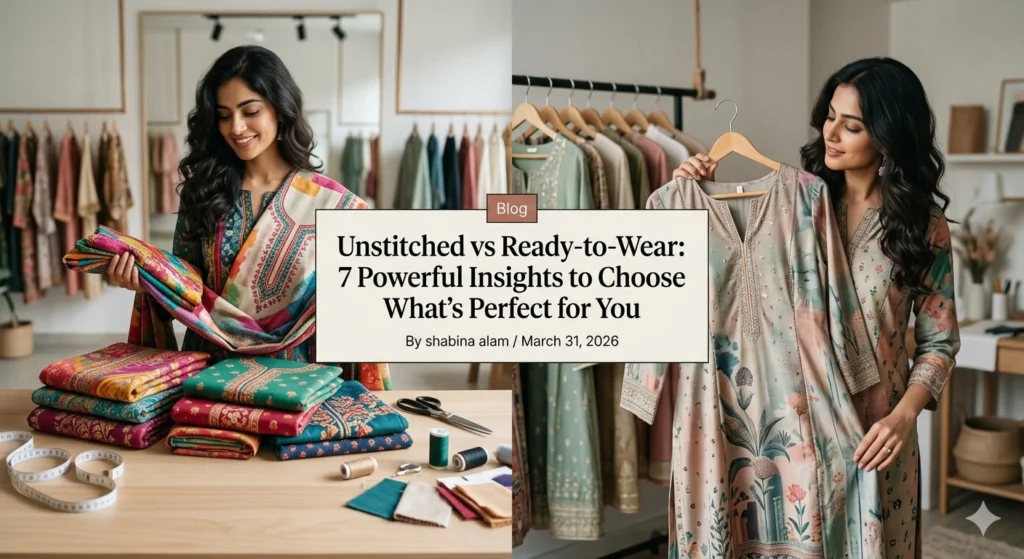
When it comes to fashion, the debate between Unstitched vs Ready-to-Wear clothing is more relevant than ever. Whether you’re preparing for a wedding, updating your wardrobe, or simply exploring your personal style, choosing the right type of clothing can make a big difference.
Both options have their unique charm. Unstitched outfits offer customization and creativity, while ready-to-wear garments bring convenience and instant style. But which one is right for you?
Let’s dive deep and uncover everything you need to know. According to Statista, the global apparel market is worth over $1.5 trillion — and the choice between custom and ready-made clothing is at the heart of how consumers spend within it.
Definition and Overview
Unstitched clothing refers to fabric that hasn’t been sewn into a garment yet. It usually comes in pieces (like shirt, trousers, dupatta) and requires tailoring.
Common Types of Unstitched Fabrics
- Lawn suits
- Cotton fabric
- Silk and chiffon
- Embroidered collections
Why People Love Unstitched Clothing
Unstitched outfits are popular in South Asia because they allow full personalization. You get to design your outfit from scratch. You get to design your outfit entirely from scratch, choosing every detail from the neckline to the hem. As Dawn Fashion regularly reports, unstitched fabric collections from leading Pakistani designers sell out within hours of launch — a clear sign of how deeply this tradition is woven into South Asian fashion culture.
Definition and Overview
Ready-to-wear (also called prêt or off-the-rack) clothing is pre-stitched and available in standard sizes.
Categories of Ready-to-Wear
- Casual wear
- Formal wear
- Luxury pret
- Western outfits
Why Ready-to-Wear is Trending
With busy lifestyles, people prefer quick solutions. Ready-to-wear offers style without the wait. McKinsey & Company reports in their annual State of Fashion report that convenience is now one of the top three factors driving global clothing purchasing decisions — making ready-to-wear one of the fastest-growing segments in the fashion industry.
| Feature | Unstitched Clothing | Ready-to-Wear Clothing |
|---|---|---|
| Customization | High | Limited |
| Time Required | More | Instant |
| Fit | Tailored | Standard sizes |
| Cost | Flexible | Fixed |
| Creativity | Unlimited | Pre-designed |
1. Complete Customization
You can select:
- Neck design
- Sleeve style
- Length and fitting
This ensures your outfit matches your exact taste. Vogue highlights how bespoke and custom clothing is experiencing a global renaissance as modern women move away from mass-produced fashion toward pieces that feel truly personal.
2. Budget-Friendly Options
You control costs by selecting fabric and tailoring services that fit your budget.
3. Perfect Fit
Unlike standard sizes, unstitched clothing is tailored to your body measurements. Harper’s Bazaar notes affects the vast majority of women worldwide.
4. Creative Freedom
Want something unique? Unstitched clothing lets you experiment with trends and personal ideas.
Disadvantages of Unstitched Clothing
1. Time-Consuming Process
From buying fabric to stitching, it takes time and effort.
2. Dependence on Tailor
A skilled tailor is essential. A poor one can ruin your outfit. The Guardian has written extensively about the growing shortage of skilled tailors globally — making it more important than ever to build a reliable relationship with a trusted one.
3. Multiple Fittings Required
You may need several visits for adjustments.
1. Convenience and Speed
Buy it, wear it—simple as that.
2. Trendy Designs
Brands follow the latest fashion trends, so you stay updated. WGSN, the world’s leading fashion trend forecasting platform, works directly with ready-to-wear brands to ensure their collections reflect what consumers want before they even know they want it.
3. No Tailoring Hassles
No need to worry about measurements or fittings.
4. Easy Availability
Available in stores and online platforms worldwide. ASOS, one of the world’s largest online fashion retailers, ships ready-to-wear to over 200 countries — a remarkable example of how accessible this clothing category has become.
1. Limited Customization
You can’t change the design much.
2. Size Issues
Standard sizes may not fit everyone perfectly.
3. Higher Cost for Designer Wear
Premium brands can be expensive.
Business of Fashion, the global authority on the fashion industry, regularly analyses the growing price gap between mass-market and luxury ready-to-wear — a gap that is widening each year.
Choose unstitched if:
- You want a custom-designed outfit
- You have specific size requirements
- You’re preparing for special occasions
- You enjoy creative styling
Go for ready-to-wear if:
- You need an outfit urgently
- You prefer hassle-free shopping
- You like modern, trendy designs
- You don’t want tailoring delays
Fashion is evolving fast:
- Unstitched now includes luxury embroidered collections
- Ready-to-wear offers fusion wear and smart casuals
Many brands even offer semi-stitched options—a mix of both worlds! Elle Magazine has identified the rise of semi-stitched and made-to-order fashion as one of the defining trends of the decade, as consumers globally demand more personalisation without sacrificing convenience
- For weddings → Unstitched is الأفضل
- For daily wear → Ready-to-wear wins
- For unique style → Go unstitched
- For convenience → Choose ready-made
Cultural Influence on Clothing Choices
In countries like Pakistan and India:
- Unstitched clothing is deeply rooted in tradition
- Ready-to-wear is growing due to urban lifestyles
Both styles coexist beautifully. Reuters has reported on the explosive growth of fashion retail across South Asia, driven largely by a young urban population embracing ready-to-wear as their primary clothing category.
- Unstitched can be cheaper if you manage costs wisely
- Ready-to-wear may cost more for branded items
However, tailoring costs can add up! The most cost-effective approach, according to Who What Wear, is to invest in unstitched fabric for key occasion pieces and rely on quality ready-to-wear for your everyday wardrobe essentials.
For Unstitched:
- Choose high-quality fabric
- Find a reliable tailor
- Plan ahead
For Ready-to-Wear:
- Check size charts carefully
- Look for seasonal sales
- Read reviews onlin
The debate between Unstitched vs Ready-to-Wear ultimately comes down to your lifestyle, budget, and personal preferences. If you value creativity and a perfect fit, unstitched is your go-to. But if convenience and speed matter more, ready-to-wear is the clear winner.
In today’s fast-paced world, many people choose a mix of both—keeping ready-to-wear for daily use and unstitched for special occasions.
FAQs About Unstitched vs Ready-to-Wear
1. Which is better: Unstitched vs Ready-to-Wear?
It depends on your needs. Unstitched offers customization, while ready-to-wear provides convenience.
2. Is unstitched clothing cheaper?
It can be, but tailoring costs may increase the total price.
3. Can ready-to-wear be altered?
Yes, minor alterations are possible.
4. Which option is best for weddings?
Unstitched clothing is usually preferred for weddings due to customization.
5. Is ready-to-wear suitable for all body types?
Not always. Some people may struggle to find the perfect fit.
6. What is semi-stitched clothing?
It’s partially stitched clothing that requires minimal tailoring.